Ellsworth Kelly, Joan Mitchell, Barbara Chase-Riboud and the Livre d’artiste
This research was conducted for a doctoral degree at The Courtauld Institute of Art, under the supervision of Professor Sarah Wilson, with Dr Caroline Levitt as advisor
In the decades following the Second World War, Paris re-emerged as a charged site of artistic experimentation, intellectual exchange and transnational encounter. Among the many artists who arrived in the city were hundreds of Americans whose practices developed within a dense infrastructure of ateliers, salons, institutions, galleries and periodicals. This thesis investigates how engagement with the artist’s book in postwar Paris shaped the trajectories of American artists and repositions the book as a central medium within the history of postwar art. In Paris, the long tradition of the livre d’artiste, sustained by workshops such as Mourlot and Lacourière Frélaut and by publishers including Maeght and Tériade, provided a material and intellectual framework in which collaboration between artist, poet and printer was embedded in artistic life. How did American artists entering this environment encounter and transform this tradition? And to what extent did the book become a site through which transatlantic artistic identities were negotiated?
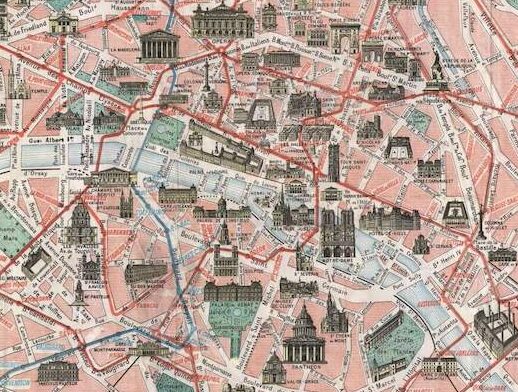
Focusing on three case studies – Ellsworth Kelly, Joan Mitchell and Barbara Chase-Riboud – the thesis examines how the artist’s book operated not as a peripheral experiment but as a structuring device within artistic practice. Through close analysis of artist’s books as an expanded field, including so called livre-objet, alongside paintings, sculptures and archival materials, this study argues that the book functioned as a space of testing, recalibration and exchange. Drawing on extensive archival research in France and the United States, the thesis reconstructs the networks that sustained book production between 1946 and 1968. It also introduces a digital mapping project that visualises the infrastructures underpinning these exchanges. Ultimately, it argues that the artist’s book in postwar Paris was not merely a vehicle of collaboration but a site in which artistic thinking was materially organised and originated. In doing so, the study reintegrates the book into the core of postwar art history and reframes it as a generative medium within the formation of American contemporary practice.
You can view Bella’s profile at The Courtauld here.